A biometry eye test measures the dimensions of your eye to help an ophthalmologist plan cataract or lens surgery. The measurements may include the eye's length, corneal power, and other features used to calculate the power of an intraocular lens (IOL).
Because every eye is different, a biometry eye test is an essential part of personalized cataract planning. It is much more than a routine eyesight examination.
What Does a Biometry Eye Test Measure?
A biometry eye test measures the eye's axial length and provides important information about the cornea and front structures of the eye. These measurements are combined with your eye examination and medical history to estimate the IOL power that may provide the best possible visual outcome.
The American Academy of Ophthalmology states that ocular biometry is used to measure axial length before cataract surgery. The testing method depends on the clarity of the eye and the individual clinical situation.
Why Is a Biometry Eye Test Needed Before Cataract Surgery?
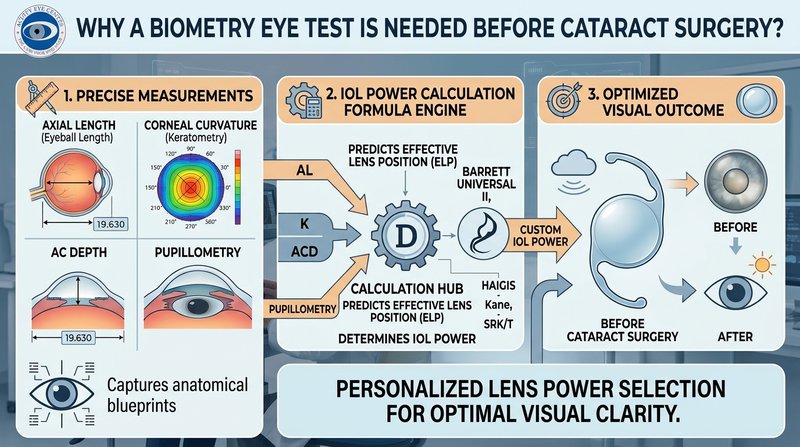
Before cataract surgery, a biometry is performed to help determine the correct artificial lens that will replace the cloudy natural lens.
The biometry allows the surgical team to make accurate calculations, although no test can guarantee a specific visual result. Other factors—including the health of the cornea, retina, optic nerve, previous eye surgery, and your visual expectations—also influence the final outcome.
Acuity Eye Center offers biometry eye testing and IOL calculation as part of its comprehensive ophthalmic services.
Is a Biometry Eye Test Painful?
A biometry eye test is usually painless. Most modern optical biometry devices are non-contact, meaning they measure your eye without touching its surface.
If a dense cataract or another condition prevents accurate optical measurements, your ophthalmologist may recommend an alternative method to complete the biometry eye test.
What Can Affect the Accuracy of a Biometry Eye Test?
The accuracy of a biometry eye test can be influenced by several factors, including:
- Dense cataracts
- Corneal irregularities
- Difficulty maintaining steady fixation
- Previous laser vision correction or refractive surgery
- Other eye diseases
If necessary, your ophthalmologist may repeat the biometry eye test or use another measurement technique to improve accuracy.
The American Academy of Ophthalmology also notes that cataract planning considers corneal power, anterior chamber depth, retinal health, and optic nerve condition in addition to biometry measurements.
Questions to Ask Before Your Biometry Eye Test and IOL Calculation
To better understand your treatment plan, consider asking:
- Which measurements were taken during my biometry eye test?
- Were the measurements reliable and repeatable?
- Which IOL options are suitable for my eyes?
- Will I need additional tests such as corneal topography?
- How much will I still depend on glasses after surgery?
- Could another eye condition affect my final vision?
What Should You Bring to Your Biometry Eye Test Appointment?
To get the most from your biometry eye test, bring:
- Your current glasses
- Previous eye examination reports
- A list of medications
- Records of previous eye surgeries
Also inform your ophthalmologist if you have diabetes, glaucoma, retinal disease, or have previously undergone laser vision correction.
Final Takeaway
A biometry eye test is a key step in planning cataract or lens replacement surgery. It provides detailed eye measurements that help your ophthalmologist choose the most appropriate intraocular lens for your individual eye. While a biometry eye test greatly improves surgical planning, the final visual outcome also depends on your overall eye health and other clinical factors. Discuss your measurements and treatment options with your ophthalmologist to understand what results are realistically achievable.